

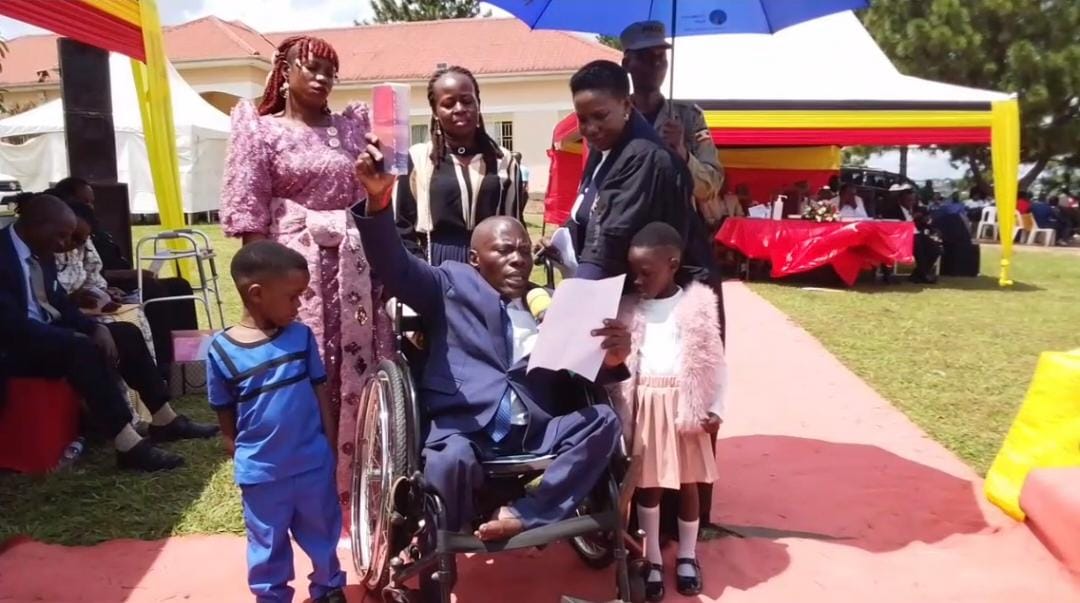
Disability rights advocates have called on journalists and media practitioners to play a more active role in promoting inclusion and challenging negative perceptions about persons with disabilities, arguing that societal barriers often create greater challenges than disabilities themselves.
The call was made during a breakfast meeting on disability-inclusive reporting organized by the Uganda Women’s Media Association (UMWA) in partnership with the National Union of Disabled Persons of Uganda (NUDIPU) and the East African Centre for Disability Law and Policy.
The engagement, supported by the Disability Rights Fund, brought together reporters, editors, media managers, and journalism organizations to strengthen accurate, balanced, and inclusive reporting on disability issues across Uganda.
Participants noted that despite growing awareness, persons with disabilities continue to face discrimination, exclusion, and limited representation in media coverage and public discourse.
According to the Uganda Bureau of Statistics (UBOS) National Population and Housing Census 2024 Disability Monograph, approximately 13.2 percent of Uganda’s population aged two years and above lives with some form of disability, representing about 5.5 million people. The report further indicates that disability prevalence is higher among women at 13.8 percent compared to 12.5 percent among men.
Speaking during the meeting, NUDIPU Programs Officer David Nangosi challenged journalists to rethink how disability is portrayed in society and the media.
“Society is often more disabling than the disability itself because of negative attitudes, inaccessible environments, and communication barriers. Many of the challenges faced by persons with disabilities are created by society rather than by their physical conditions,” Nangosi said.
He emphasized that persons with disabilities should not be viewed as objects of pity, charity, or sympathy, but as individuals entitled to the same rights and opportunities as everyone else.
“Persons with disabilities are not abnormal, helpless, or less valuable. They deserve equal opportunities and full participation in all aspects of life,” he added.
Nangosi also criticized the traditional medical approach to disability, which focuses primarily on impairments rather than social inclusion.
“Not every person with a disability is a patient. The human rights approach recognizes persons with disabilities as citizens whose rights must be respected, protected, and promoted,” he explained.
He further noted that disability can result from preventable factors such as road crashes, violence, workplace injuries, and unsafe environments, underscoring the need for stronger prevention measures and inclusive policies.
Statistics presented during the meeting revealed persistent inequalities affecting persons with disabilities. More than half of children with disabilities aged between six and 24 years remain out of school, while internet access among persons with disabilities stands at only 5.9 percent nationally, limiting access to information, education, and economic opportunities.
UMWA Media Trainer Laila Ndagire urged journalists to intentionally include persons with disabilities in news stories, public debates, and development discussions.
“If persons with disabilities are not given an opportunity to speak for themselves, society will never fully understand their experiences and challenges. Journalists must be deliberate about inclusion and ensure every voice is heard,” Ndagire said.
She warned that careless reporting can reinforce harmful stereotypes and deepen discrimination.
“The media has enormous influence. What is broadcast on radio, shown on television, or published in newspapers is often accepted as truth. Journalists therefore have a responsibility to challenge stereotypes rather than reinforce them,” she noted.
Ndagire also encouraged media houses to make information accessible to all audiences by considering different forms of disability when producing content.
“Whether information is shared through radio, television, newspapers, or digital platforms, accessibility should always be a priority. No one should be excluded from accessing information because of a disability,” she added.
UMWA Programs Officer Doreen Sampa said the engagement was organized in response to concerns that disability issues often receive limited attention in newsrooms and public discussions.
She explained that media managers, editors, journalists, and representatives from professional associations, including the Uganda Journalists Association, the Parliamentary Press Association, and online media practitioners, were specifically targeted because they influence editorial policies and newsroom priorities.
“Inclusive journalism has the power to reduce stigma, promote human rights, and ensure that persons with disabilities are visible in national conversations and development processes,” Sampa said.
Participants also highlighted challenges affecting disability reporting, including limited newsroom resources, inadequate training, and the lack of dedicated reporting opportunities. However, advocates urged journalists to view disability reporting as a human rights and development issue rather than an act of charity.
The meeting concluded with a renewed call for the media to embrace disability-inclusive journalism, amplify the voices of persons with disabilities, and contribute to building a society where everyone can participate equally regardless of physical, sensory, intellectual, or psychosocial differences.
